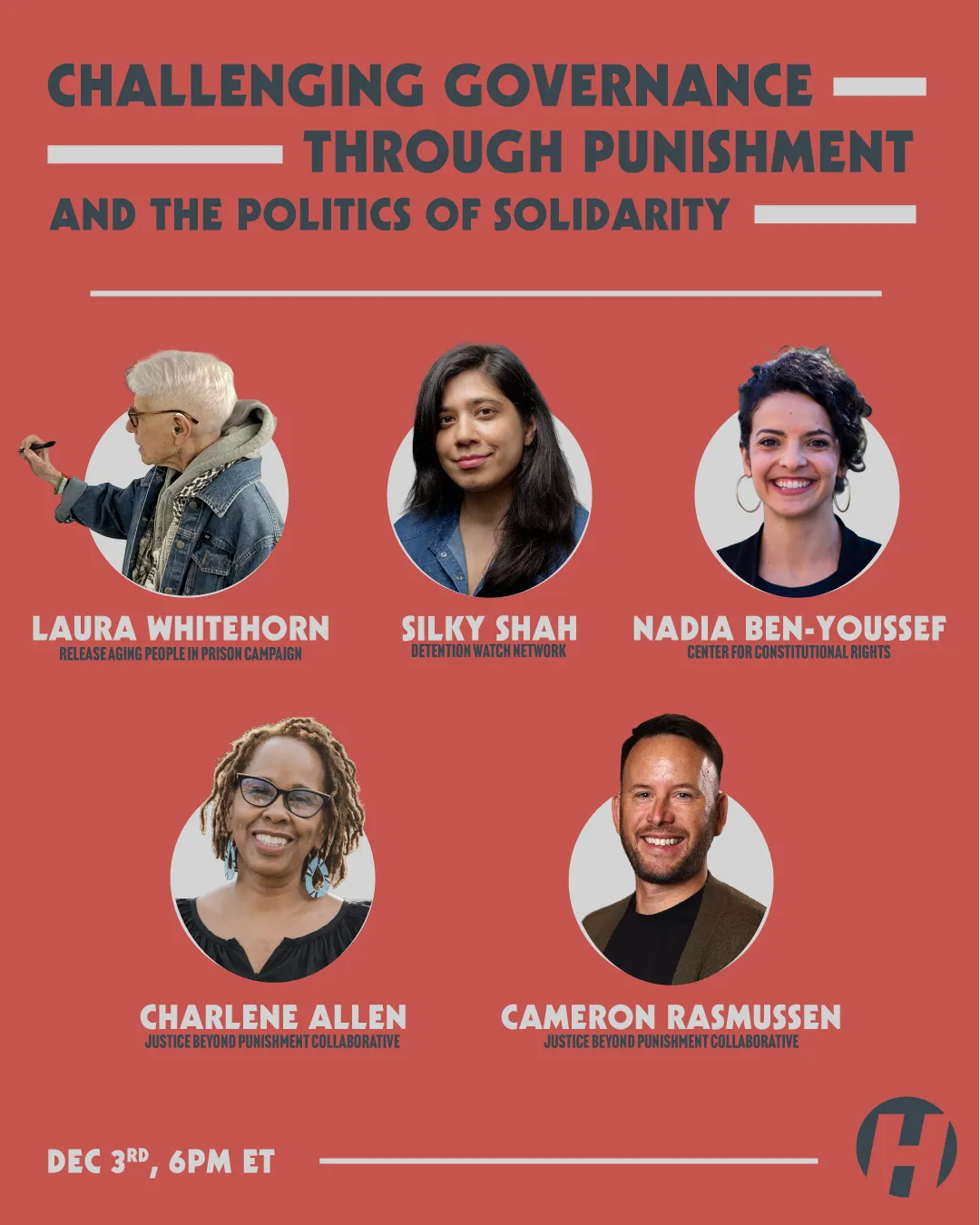
For more than two decades, the movement to end mass incarceration has sought to challenge policing, criminalization and incarceration as harmful institutions. Amongst the harms perpetrated by these carceral systems is the punishment paradigm, a term that signifies the hegemonic power of punishment as it now exists in the U.S., embedded in culture, media, law, and policy. Despite a heightened consciousness around the negative impacts of punitive systems following the uprisings of 2020, the institutions of punishment have remained largely intact.
The Trump administration has significantly escalated the use of punishing institutions, like policing, detention, incarceration and deportation, to target migrants, dissidents, and all people at the margins. The federal government has also increased its use of punishment practices, like the threats to punish institutions for not complying with government demands, the outsourcing of punishment to everyday people, and the impunity offered for otherwise punishable offenses to those who side with the administration. This escalation has demonstrated the centrality of punishment to authoritarian regimes, and laid bare the devastating consequences for our communities.
This panel conversation will analyze the role of punishment in our current political moment, and explore why and how our movements must confront the punishment paradigm as part of a necessary strategy to build sufficient power to achieve both ideological and material wins. The panel will also explore the politics of solidarity (in contrast to capitulation) to discuss why and how solidarity is vital to survival and power-building.